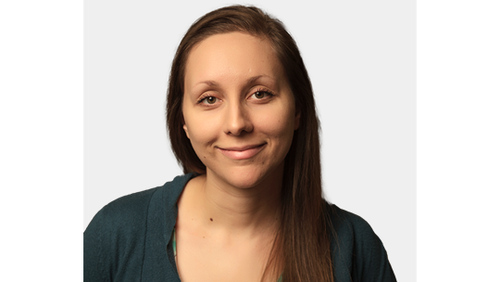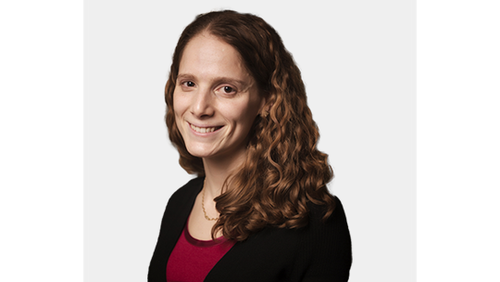

Host: Leigh Parise
Producers: Katya Manna and Jonny Poilpré
Policymakers talk about solutions, but which ones really work? MDRC’s Evidence First podcast features experts—program administrators, policymakers, and researchers—talking about the best evidence available on education and social programs that serve people with low incomes.
Latest Episode

Transcript
Leigh Parise: Policymakers talk about solutions, but which ones really work? Welcome to Evidence First, a podcast from MDRC that explores the best evidence available on what works to improve the lives of people with low incomes. I’m your host, Leigh Parise.
Research evidence about programs and policies is only valuable if decision-makers use it. One of the things we think about a lot here at MDRC is how large community-based nonprofit organizations use data and evidence to improve the lives of the people they serve. This could involve things like developing new programs, supporting existing ones, or advocating for more effective government investments. Today, we’re very fortunate to be talking with someone who has spent his career addressing this question.
Milton Little Jr. has been at the crossroads of evidence building and community building for the last 40 years, working as an executive for national and regional nonprofits as well as for corporate philanthropy. Since 2007, Milton has been the president and CEO of the United Way of Greater Atlanta—one of the nation’s largest United Ways, serving 13 counties in the Atlanta metro area. Milton has also led the United Way of Massachusetts Bay, served as executive vice president of the National Urban League, and held leadership positions at Lucent Technologies and AT&T. He’s also a longtime member of the MDRC family, having served as MDRC’s vice president of operations in the mid-1980s and early 1990s, and joined MDRC’s board of directors in 2020, where he currently serves as treasurer.
Milton, welcome to Evidence First. I’ve really been looking forward to our conversation today.
Milton Little: Oh, thank you. Thanks for the opportunity to be here with you and to talk about the things that matter to me a lot.
Leigh Parise: Let’s jump in. Milton, you’ve now been leading the United Way of Greater Atlanta for almost 20 years. It’s one of the largest chapters within the United Way Worldwide network, and it serves 13 counties in the Atlanta metro area. It would be great if you could start by telling us about your work there. We’d really love to hear about the community and some of the challenges and opportunities you see.
Milton Little: I’ve enjoyed this United Way. I’ve been here almost 20 years. I also ran the United Way in Boston for three years. But before that, I had a varied background that crossed the public, private, and nonprofit sectors.
Atlanta is an extraordinary place; it’s a place of extraordinary opportunity. It’s the global headquarters of some of the world’s most important companies: You think about Coca-Cola, the Home Depot, UPS, Delta Air Lines, and Global Payments. The man who owns the New York Stock Exchange lives here in Atlanta; Intercontinental Exchange, which also runs the London Stock Exchange. Atlanta has become almost the fintech capital of the world. You’ve got some of the most affluent neighborhoods in the United States—you think about Buckhead, Chastain Park, Tuxedo Park. You go up north to Johns Creek and, oddly enough, Milton, Georgia, and you’ve got just extraordinary wealth.
You also have some of the most persistent poverty in the country. Thirty-four percent of working Georgians who live in metro Atlanta don’t earn enough to pay all their bills at the end of the month. And so I like to think of it as the Atlanta paradox: extraordinary opportunity and wealth, and some of the nation’s most persistent poverty. All of that provides the laboratory for the work that we do in the United Way, which has been part of a global change in our network. United Ways used to be measured [based] on how much they raised and how inexpensively they could get that money out to worthy organizations. I joined at a time when impact was how people wanted to measure what United Ways do, and what they accomplished. And it’s in that context that this whole idea of the role of research and data has really driven what this United Way does, as well as what many of my counterparts do across the world.
Leigh Parise: That’s great. Tell us a little bit more about how you measure that impact.
Milton Little: We have focused on improving the well-being of children across Greater Atlanta. That’s been our mission for almost 10 years. How did we get there? We got there by looking at the data. We got there beginning in 2013, when Raj Chetty first identified the link between geography and economic mobility. It was about the same time that some researchers from Brookings noted that Atlanta had some of the fastest-growing poverty in the suburbs of any metropolitan area in the U.S. That had us focusing on economic mobility but building a place-based strategy.
We measure impact through our Child Well-Being Index. It’s a data-informed strategy, with 14 variables that measure the education, economic status, and health status of children and families. We use that data to identify what strategies to employ to solve the challenges that those communities, families, and individuals face.
At the same time, how do we measure the impact? Is the child well-being score increasing or decreasing in the communities where we are focusing our investment strategies, and helping to align the investments of other philanthropists, public officials, and others?
Leigh Parise: Thank you. That sounds really important, and like a really interesting lens that you are using. I wonder—when you got there and you decided that this was the way that you wanted to measure impact—did you have any work to do to try to get your own staff (or local philanthropy, or others who were engaged in your work) on board by saying, “This is, actually, the way that we need to measure whether or not we’re making a difference. Let me tell you why this is different than when you wanted us just to count the number of people that we reached”? Or something like that.
Milton Little: I got to this United Way at a time when it was in the middle of the transition to a much more outcomes-based approach. Many of the outcome measurement strategies that you find across the United Way system began under my predecessor here. So I got to a place where people were already thinking about looking at the numbers, as folks used to say, and what we were seeing in terms of change. But there was a lot more sophistication that needed to be brought to this work. We created a research advisory board that had researchers from Georgia State and Emory joining our investment strategy staff to think about how we measure what we are accomplishing.
There was no Child Well-Being Index when I arrived, so we had a team of folks—along with a neighborhood data organization called Neighborhood Nexus—build that index. So I got here, and there was a foundation to begin to work with. But there was a lot more work that needed to be done to credibly give our audiences (foundations, individuals, and others) the data that they needed to show that the impact that they wanted to see with their philanthropy was actually what we were able to accomplish.
Leigh Parise: Being able to tell that story—using the data in a way that you felt was capturing what was happening on the ground and was easy for people to understand—was, I imagine, probably one of the things that you needed to tackle. And [it] has been a really important reason that it has stuck and been something that you’ve continued to focus on.
Milton Little: Absolutely. I will say, we’re not in a position where we can do the kind of rigorous evaluation that you’re used to, or that I’m used to, through the history I have with MDRC. Sometimes it’s as simple as being able to count people to a turnstile. A lot of nonprofits don’t have the capacity to do that. They rely on anecdotes to say, “Here’s the difference that we’re making. And look at Individual Case A as a proof point that we’re making a difference, so give us more money.”
I operated from a perspective that we needed to be a lot more sophisticated than that and build the partners and credibility through any means that we could—to show that United Way’s more than just a collector of community philanthropy and a distributor of it. That, in fact, it had a strategy, it had targets, it had a way to measure the difference between today and tomorrow, and we could talk about pathways that families and communities needed to be on for the ultimate goals that we were trying to achieve.
Leigh Parise: Yeah, that makes a lot of sense. Thanks for talking through that. I imagine you still use the Individual Case A anecdote to help tell some of those stories, but it is clear that you’re having a broader vision, and talking about it on a larger scale is really important.
I like where you’re headed. I will say, as researchers at MDRC and people who think a lot about how to help people apply evidence, part of our mission is helping to make sure that the knowledge that we’re building can actually make it into the hands of people who can use it—whether that’s policymakers, funders, or nonprofit leaders.
I’d love for you to talk about the role of research evidence. You’ve already talked about data, but tell us a little bit more about how research evidence finds its way into your day-to-day operations as you support Atlantans.
Milton Little: It’s about bringing that data not only to the audiences outside the United Way, but inside the building. How do we need to reimagine our investment strategies? If the data’s saying we’ve got rapidly growing poverty in the suburbs, what does that say about where investments need to be made?
The Child Well-Being Index was a tool we used back during the pandemic. We were able to identify where the communities were that were likely to be hit hardest, and where we should begin to mobilize the $29 million we raised as pandemic relief across the region to solve food insecurity, to solve the threat of housing loss because people were not able to meet their mortgage or rental payments.
So we try to use the data as best as we can, not only to identify what the problems are, but to target where our investments—and where the companion investments of county officials, foundations, corporate foundations, and others—need to be if we really want to try to change the life circumstances of folks across Greater Atlanta.
Leigh Parise: Yeah. Thank you. I love how you’re thinking about it. I think that piece of Where are we funneling our resources to make the biggest difference? is, for MDRC, one of the key ways that we hope people are going to be thinking about evidence and using it.
One question for you, now: We’re living in a bit of a polarized political atmosphere, and so I’m curious to hear your thoughts on what role you think independent research has now and in the near future.
Milton Little: I think that independent research, now and in the future, will play—should play, must play—the same role it has played in the past. That is to organize how we invest resources based on evidence. What’s that compelling evidence that is agnostic about politics—and we invest where the evidence says to go, not based on the political party that’s making decisions. I think that’s the most important role that independent research can play. It’s a credible nonpartisan effort that really tries to shift the conversation away from ideology to impact. Where are we making this impact? And it’s incredibly important, in an era of scarce resources. It ought to be independent, nonpartisan, fact-based decision-making that we engage in, if we are going to be the best stewards of the precious resources that the public invests in us as public officials, and that philanthropy invests in us as researchers to drive change.
I think it’s absolutely essential going forward, in the same way it’s been essential in the past. Get past the noise and really look at what the data tells us about what works and for whom.
Leigh Parise: I think that piece is something. As you know, that’s long been part of the fabric of MDRC. I’ve been here 15 years, but you have a lot more MDRC experience than I do. And you have, I would say, a really unique perspective on MDRC. You were initially here during MDRC’s adolescence, right? Maybe that’s not what everybody would call it. I might be showing my [status as] the parent of a middle schooler right now, but it feels like it would be a missed opportunity for me not to ask you about how you’ve seen our work change over the years, from when you arrived (and MDRC was around 15 years old), to now, when we’ve been around for over 50 years. If you’re game, I’d love to hear you talk a little bit about that.
Milton Little: I will date myself and invite your listeners to start doing the math to figure out how old I am, but I joined MDRC in 1985. I was working in field ops on the JOBSTART project, and so I was going around the country trying to identify sites that would be in JOBSTART. [That project] was an effort to figure out what you can do with kids 17 to 21 years old who are out of school, and how you get them skilled and into the workforce in ways that will enable them to achieve some measure of economic independence as adults. These are kids who just had a whole lot of strikes against them. MDRC was still in the era of large-scale demonstration projects, funded by the Department of Labor and by foundations like Ford and Grant and Kellogg (and all the big players).
This was an amazing time to be able to do this and to be able to travel the country and see organizations that are trying to do good work and spend your time trying to figure out how to convince them that they needed to be in a rigorous evaluation that controlled experiments. Say what you will about me, but I enjoyed that. I enjoyed trying to convince folks to be a part of those efforts. I was there at the time when welfare-to-work initiatives began to take hold as [there were] a lot of shifts in the appetite that people had for large-scale demonstration projects.
To see all of that— I left in 1993, finishing up the pilot of Parents’ Fair Share, which was a focus on what you can do in the child support system for folks who were unemployed—or may, in fact, be incarcerated—who are unable (or in some cases, unwilling) to meet their child support obligations. What can you do with those folks?
Most of my time was spent—in that period, when you could still get some national demonstrations underway, but the tide was beginning to shift, and MDRC was able to pivot— And MDRC has always been able to pivot, still staying true to its mission, but being able to do it on the most important research and policy questions of the day, even as the laboratory for the experiments was shifting because of policy and other factors.
Leigh Parise: That’s great. I, too, am one of those people who actually enjoys getting to go out into the field and talk to people and say, “Let me tell you why, even if it sounds really hard or really crazy on the front end, this actually makes sense, both for the people that you serve and for your organization.” So I hear you. And I will say, in the 15 years I’ve been [at MDRC], that willingness and necessary ability to adapt and pivot has been one of the things that has kept me here for so long: being able to shift and say, “Okay, what is it that the field needs now? What are we hearing from policymakers and from practitioners? How can we meet people a little earlier and work with nonprofits a little earlier in their journeys as they’re grappling with some of the things you talked about—United Way’s grapple with getting there and figuring out how you can actually track data, collect information, use it, and feed it back into your programs?” So it’s helpful to hear you talk about that.
Milton, part of supporting a community—like you are in Atlanta—is being able to envision its future. As you look into the future for Atlanta, and for our country more broadly, I’d love to hear you talk about some of your priorities and how you think organizations like MDRC can continue to support those priorities.
Milton Little: Thanks for that question. My priorities—the organization’s priorities, not even my priorities, really—are probably going to be the same: still focusing on child well-being, economic mobility, family stability, in large part because the solution to those issues is how successfully we can align systems. The problem undergirding those issues is not that we don’t have enough programs. You can have all the programs you want, but if Education doesn’t talk to Workforce, doesn’t talk to Economic Mobility, doesn’t talk to Health, then those verticals continue to do what they do, but the interconnections don’t get made. So there’s a lot of work that needs to be done with system alignment, which, I think, is sort of the next frontier for this United Way—and for any city like Atlanta that is struggling with the kinds of issues that we are. Which is almost all major cities in the U.S. that have diverse populations and diverse life chances based on race, geography, and a whole host of other variables.
Where I think MDRC can come in is to continue to be a value-added partner in that public conversation about where we can make the most difference. Anytime MDRC’s research comes out, I pass it off to the staff people here. I got a staff person here who’s focused exclusively on apprenticeships, and sometimes, before I even read it, I pass it on to Michelle, because this is central to the work that she’s doing. The work that MDRC’s done on literacy and early learning and childcare all gets passed along to the folks who have those responsibilities in the building. And so continuing to provide the quantitative evaluations, but also the implementation stuff that people need on the How? What’s it take to mount these things? What’s it take? What are the alignments? What are the conversations? What are the processes that need to be put in place to build a better house for folks to be able to really inhabit as part of that economic mobility strategy? And that’s house as a metaphor, not house with four walls and doors.
All of these things need to be thought of within the context of How do we bring these pieces together? How do we construct a better way to move forward? I think MDRC can continue to play. And as long as I stay on the board, I’ll continue to ask the implementation questions: ”Okay, what else do we learn? And who else can find value in the how-tos as much as the organization places priority on the quantitative impact?”
Leigh Parise: You’re preaching to the choir here. As an implementation researcher, that always, to me, is such a critical component of our studies. I love that we very rarely are going to take on something that’s going to give you the quantitative results without also talking through that.
All right. Milton, you’ve held a lot of different roles, from being at MDRC to being in corporate philanthropy to [being] the longtime head of an incredibly influential United Way. I’m curious, what advice do you have for other leaders in the sector as they try to navigate the current environment and support the types of priorities that you’ve mentioned? Your organizational priorities likely align with a lot of others as well. Any words of wisdom or advice as we wrap up today?
Milton Little: Yes. The words of advice are embedded in something that a lot of people in Atlanta have heard me say time and time again: No matter how difficult the day is, when I put my head down on the pillow at night, I know somebody is better off for what I did that day. And at the end of the day, why are we doing this? We do this to make the world a better place, to try to improve the well-being of children. I came back years after I graduated from college here in Atlanta to find that some of the neighborhoods that were in a bad way then are still in a bad way now. And I was audacious enough to think that I had spent a career changing the world everywhere I touched; I needed to come back to Atlanta and see if anything I did before mattered here now.
The best advice is to remember the why. Why do you do this? What are you trying to accomplish? And who can you get to engage in that work with you? Because there are passionate people who care about folks who struggle. There are passionate organizations whose missions are to make their communities better. There are philanthropists who dream of a better world and imagine how their philanthropy can be the fuel for that new and better world. And there are organizations like MDRC with incredibly talented people who want to ply their trade in an organization that’s committed to evidence-based research that’s going to improve well-being. There’s just a whole lot of folks
like you and me who want to do this stuff. Let’s find them and let’s all do the work together.
Leigh Parise: Thank you so much. I asked for advice, and I didn’t know that I was also going to end on such a hopeful note. I really appreciate that, Milton. Thank you so much for taking the time to talk with us today. It has been wonderful to have you as a guest. We thank you for your service on our board and your service to Atlanta, and even more broadly.
Milton Little: Well, thank you, Leigh. It’s always a pleasure to be in your company. Continued good luck in everything that you touch.
Leigh Parise: I know many folks in our field will be really excited to get to listen to these words of wisdom and lessons that we’ve just discussed.
To learn more, visit mdrc.org. Did you enjoy this episode? Subscribe to the Evidence First podcast for more.
Using data and research evidence can help nonprofit and community-based organizations develop new programs, support existing ones, and advocate for more effective government investments.
In this episode, Leigh Parise talks with Milton J. Little Jr., President and CEO of the United Way of Greater Atlanta – one of the nation's largest United Ways, serving 13 counties in the Atlanta metro area. Little is a member of MDRC’s Board of Directors, where he serves as treasurer.
Little and Parise discuss the importance of independent research and how using data and evidence can help community-based organizations improve the lives of the people they serve.