

Experts on the Future of Clean Energy Jobs


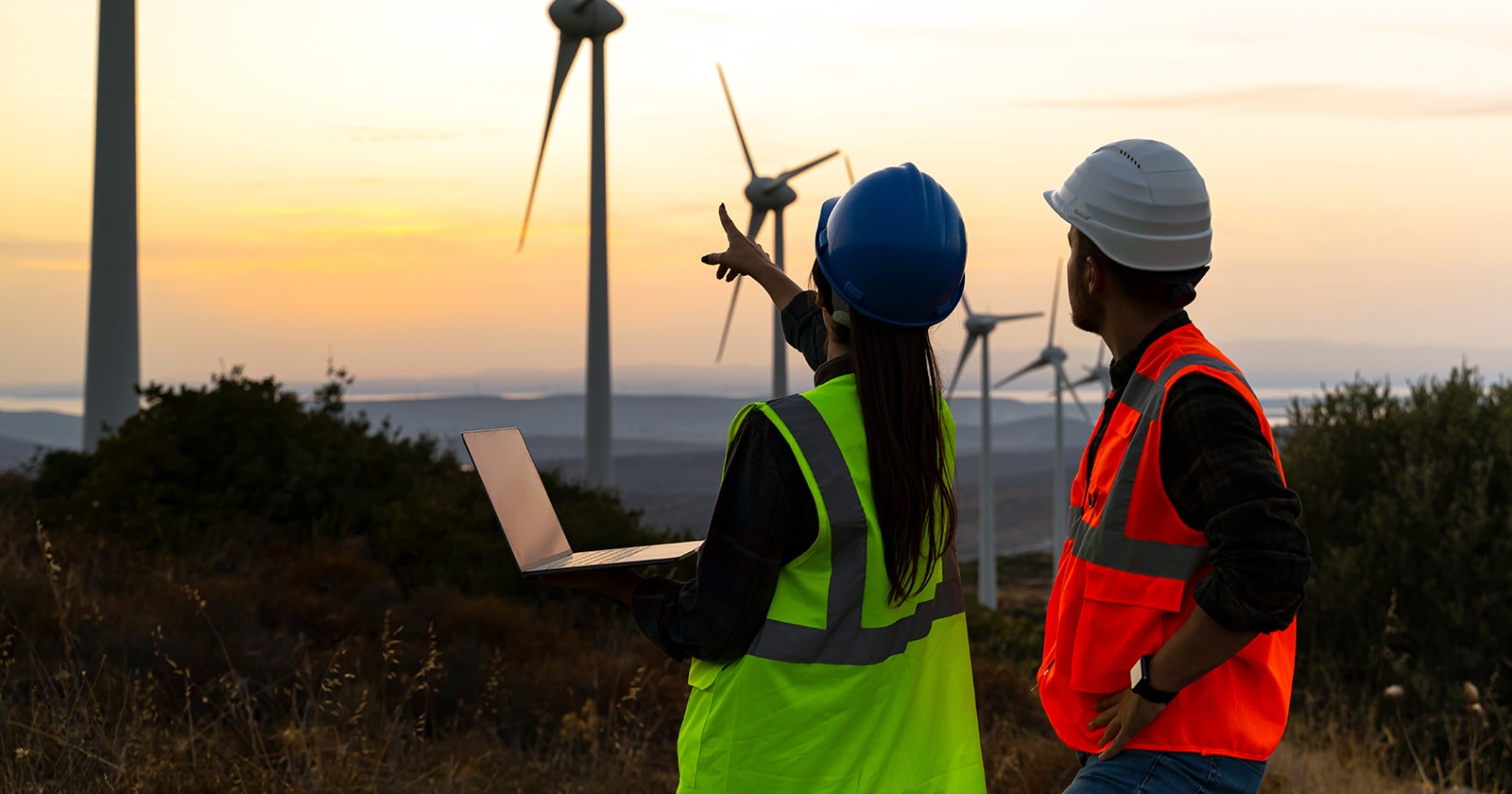
In September of 2025, MDRC and Advance CTE together convened experts in the effort to educate and train tomorrow’s workers for careers in the clean energy and climate economy. Broadly described, these are jobs that work to build new infrastructure for wind energy, solar energy, and electric vehicles; that adopt new, less energy-intensive technologies in other arenas; or that adapt existing land and infrastructure to accommodate these newer, cleaner technologies (for example, through building retrofitting, land management, and changes in resource use). Many of these jobs pay well, do not require a four-year college degree, and are in growing demand.
Attendees represented a cross-section of secondary and postsecondary career and technical education (CTE) practitioners and policymakers; federal, state, and local agencies; employers and industry groups; labor unions; philanthropies; and nonprofit intermediary partners, all working at the intersection of climate, education, and labor markets. Advance CTE had been working for six months to develop a set of policy recommendations for states and districts looking to implement CTE programs related to this portion of the economy, and the event focused on getting experts’ reactions to those recommendations and finalizing them.
As a cosponsor of this event, MDRC’s Center for Effective CTE was focused on two main questions:
- What is the future labor market in the clean energy and climate-related economy for young people?
- What does the existing evidence base for CTE say about how to develop and expand high-quality education and training for these jobs?
Q1: CTE and the Future of Energy Transition Jobs
As part of the previous federal administration's efforts to reorient the country's industrial policy toward both new and cleaner technologies, several large bills were passed that were at the time predicted to create as many as 2 million to 9 million new jobs in a decade. However, many of the related subsidies and provisions of those bills have been canceled or substantially altered in the current federal environment, raising questions of whether those jobs are still coming and whether it still makes sense to train people for them. Currently, it is hard to find new projections of job growth in these areas that account for these reversals of federal policy, but it is worth noting how entrenched many of these jobs and sectors already are across the country. For example, nationally, more than 3.6 million people already work in clean energy and climate jobs. In 2024, the solar workforce employed almost 500,000 people across all 50 states, and there are a further 131,000 jobs in wind energy and 380,000 jobs in electric and hybrid vehicles. Importantly, four out of five new energy jobs were in clean energy in 2024.
It addition, for many states, clean energy is ascendant, with several states already getting the majority of their electricity from renewable sources, including Iowa at 63 percent and New Mexico at 54 percent. Large states such as Texas and California also rely on renewables to supply large portions of their energy needs (30 percent and 41 percent, respectively). Solar and on-shore wind power are currently the two cheapest forms of energy to develop and build in the world and large-scale batteries (to store renewable energy while the sun isn’t shining or the wind isn’t blowing) have also gotten much more reliable and cheaper, and jobs in clean energy battery storage are also growing rapidly. Demand for energy is also growing due in part to the growth of artificial intelligence (AI), which requires vast amounts of energy, and many technology firms at the forefront of AI, such as Microsoft, Google, and Amazon, are investing in renewable energy to meet AI’s energy demands. Given all these factors, it is unlikely that these industries will stagnate or decline; it is more likely that they will continue to produce jobs despite changes in federal policy.
Finally, even if the trajectory of the United States’ clean energy transition is less robust than was initially predicted, it is important to note how rapidly the rest of the world is continuing to transition toward newer kinds of energy. For example, by 2030, 14 countries will get a majority of their energy from renewables, doubling from the 7 that already do. The growth of multiple forms of new-technology energy is increasing exponentially, and if current trajectories continue, by 2030, two-thirds of all new cars sold will be electric and solar sales will increase sixfold. To avoid ceding to foreign competitors industrial sectors that are critical to future growth, such as battery production and grid modernization, and to avoid losing domestically based high-wage jobs overseas, the United States will need to invest in training for these new industries.
Q2: Adapting CTE for the Future Labor Market
CTE is well positioned to prepare students for jobs in the energy and climate transition. These jobs include many in fields aligned with the National Career Clusters Framework that states use to design high-quality CTE programs, including those in Construction, Advanced Manufacturing, Supply Chain and Logistics, Energy and Natural Resources, Agriculture, and Public Service and Safety, among others.
That said, predicting the future of the labor market has always been a challenge for CTE, particularly when working with secondary students, and it has become more so as labor market change continues to accelerate. But the current Perkins legislation (the federal law that provides CTE funding) requires that states and school districts align CTE programs with local labor market needs. Because that alignment depends on good information on labor markets, it is worth educators’ time to understand where growth and jobs in this space are happening, and to adapt offerings and curricula to meet those changes. Some resources that can help CTE educators include career maps in green buildings and solar or other relevant fields, for example. Or maps of where different kinds of investments and jobs are growing. Planning now for the job market that students will grow into is especially important because students who are currently enrolled in the ninth grade will not graduate high school until 2029, when the United States may have different skill needs and a different federal environment. The job of CTE is to prepare students for the labor market of the future, not the one of the present.
Because there is already a strong evidence base for CTE that suggests it is an effective tool to promote successful student outcomes, it is a natural venue for preparing students for this changing economic sector. In particular, well-designed programs that include elements such as structured pathways (in which students take sequences of related courses), strong partnerships with employers, meaningful work-based learning experiences, and dual enrollment (in which students earn college credits while in high school) have all been found to improve students’ outcomes.
Rigorous studies have found that models such as Career Academies, P-TECH schools, Early College High Schools, and CTE-dedicated or Regional CTE High Schools lead to positive outcomes for students that include increased high school graduation, increased college enrollment, increased college degree attainment, and increased wages. Additionally, program features such as CTE-oriented dual enrollment and well-trained teachers with higher levels of CTE content knowledge have also been associated with positive outcomes, including increased postsecondary degree attainment and higher earnings.
While evidence on specific fields of study for CTE programs is limited, what does exist suggests that the fields students need to prepare for the clean energy transition and climate future are also some of those where CTE is associated with positive earnings outcomes: construction, transportation, manufacturing, and technology. At the same time, many of the other programs that have been evaluated and found to have positive effects are not related to specific fields, suggesting that those program models can easily be adapted to meet the demands of the jobs in fields that are growing.
Economic and technological change are happening fast today, and a body of evidence shows that CTE is effective in producing positive student outcomes. Ensuring that students are prepared for the future through CTE focused on energy and climate can be a win-win for learners and the future.