
MDRC’s Evidence to Practice: A Year in Review


In 2025 MDRC launched Evidence to Practice, its innovative technical assistance (TA) approach reflecting 50 years of experience. It has been an eventful year working with various organizations, agencies, and other government entities across our four facets of TA: Using Data, Innovating and Expanding Services, Assessing Impact, and Diagnosing and Addressing Problems.
1. MDRC Establishes Learning Labs for Multiservice Organizations
Learning Labs exemplify MDRC’s Evidence to Practice work, bringing together our most innovative and effective approaches to one place where learning happens for everyone involved. We collaborate with organizations on using data and evidence to design solutions together, and then test those solutions to learn which approaches are best for their clients.
CitiLink Center
A citywide initiative in Cincinnati providing an integrated center of holistic services
MDRC is engaged with the CityLink Center to codevelop a roadmap to bring its program model to a larger scale, beginning with a joint review of CitiLink’s logic model and performance-measurement framework to assess how well its metrics match its theory of change. These activities, along with the support of learning communities, will inform a broader learning agenda to help strengthen CitiLink’s program model, communicate its potential more precisely, and facilitate its expansion.
Cypress Hills Local Development Corporation
A community-based organization in East New York offering programs in career and education, affordable housing, community development, and youth and family services
MDRC is assisting Cypress Hills in its efforts to improve the proportion of graduates of its workforce training programs who retain employment after 12 months. Drawing on the evidence base MDRC has developed on such training programs, the team is helping Cypress Hills to bolster its employer engagement. Additionally, MDRC and Cypress Hills are using data to identify challenges participants face, designing new solutions to address them, pilot testing the new solutions, and reviewing data to determine next steps.

Goodwill Easter Seals Minnesota
A nonprofit organization offering a wide range of workforce development services that promote employment and family stability
MDRC is assisting Goodwill Easter Seals Minnesota in unifying its Family Stability Division using a shared vision of offering “a whole-family approach.”[1] MDRC used customer journey mapping (a map of events in a process from a participant’s perspective) to enhance staff members’ awareness of each other and the various family programs, deepen their understanding of participants’ experiences, and cocreate new service ideas. In the coming year, the staff plans to pilot test and refine the ideas based on participants’ reactions, data review, and preliminary observations.
2. TA Project Spotlights
MDRC’s TA team has spent the year listening to partners to understand their needs and collaborating with them in accomplishing the goals that matter to their participants. Here are some highlights from two of our many TA projects from 2025.
MDRC is providing technical assistance to 25 employment programs serving “opportunity young adults” (people under 25 who are not in school or working) throughout California. BOOST, administered by the California Economic Development Department, helps those programs use data to test new strategies and strengthen implementation. In October, MDRC convened participating programs from locations across the state.
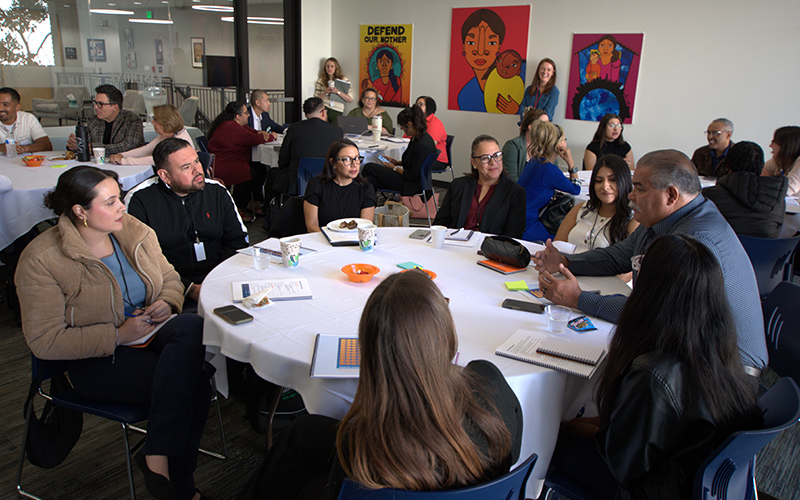
I felt the brainstorming workshop sessions were most helpful since it gave us space to think critically about our program with no distractions and direct support from MDRC members. I feel like our work setting doesn’t provide many opportunities for that kind of detailed work!
Rachel Ticas, Experiential Learning Coordinator at East Bay Foundation/California State University East Bay
The Economic Mobility Lab at MDRC provides sectoral training providers (training providers focused on particular economic sectors with high demand for workers) with a collaborative and supportive environment to experiment with and refine their program operations. MDRC has completed work with six of eight organizations, and each has seen improvements in program processes and participant outcomes. In November, EML published a Process Framework outlining its four phases of working with providers.
I really have to credit MDRC and the team that we worked with on teaching us how to journey map and how to think from a [human-centered design] approach because once we figured out how to journey map and how to develop a learning cycle we were like, “We can do this for so many things.”
Samantha Shahid, Chief Program Officer at Towards Employment in Cleveland, Ohio
3. From Stuck to Strategic: A Practical Starting Point—MDRC’s First Evidence to Practice Webinar
Over 60 people across the country from a wide range of fields joined us in December 2025 for our first interactive webinar. Attendees learned behavioral science tools for program success that they could apply right away. The webinar attendees practiced using MDRC’s Effective Communication Checklist and Developing SIMPLER Solutions Framework. Attendees left the webinar excited to share these tools and apply what they learned. A smaller group stayed on for the opportunity to listen to, reflect with, and learn from others from peer organizations.
Weren’t able to attend? Check out the recording of our webinar here!
4. Looking Toward 2026
In 2026 we expect to continue supporting organizations to build new evidence, use existing evidence, and harness data to advance their goals by:
- Expanding the Learning Labs to more organizations
- Offering additional webinars and peer community learning experiences
- Disseminating practical tools and resources
5. How can you work with us?
Reach out to us at E2P@mdrc.org if you are interested in sharing more about what you need. We can work with you if you are:
- A nonprofit organization or government agency interested in making a greater difference for the people you serve
- A philanthropy that wants to help your grantees improve their services, build a learning agenda, or both
[1] The division includes a program for fathers, a program for people who were recently incarcerated, and two programs for heads of households on Temporary Assistance for Needy Families.