Founded in 1974, MDRC is committed to improving the lives of people with low incomes. We design promising new interventions, evaluate existing programs, and provide technical assistance to build better programs.
MDRC develops evidence about solutions to some of the nation’s most difficult problems. Explore our projects and variety of products, including publications, videos, podcast episodes, and resources for researchers and practitioners.
In the spring of 2019, MDRC invited practitioners from innovative career and technical education (CTE) programs to discuss questions of equity. This policy brief summarizes the most common equity challenges that were raised in the discussion, along with ideas that emerged for how to address them.
Integrating Workforce and College-Readiness Training into California’s Adult Basic Skills Programs
New models for adult education that integrate basic skills education with workforce and college-readiness training are catching on across the country. In this report, MDRC examines the development of these programs in California and suggests ways to expand these integrated models in adult basic skills programs across the state.
How CUNY Start Reshaped Instruction for Students Referred to Developmental Mathematics
Using data from interviews, classroom observations, an instructor survey, and curricular materials, this paper describes four key features of the CUNY Start mathematics instructional approach, paying particular attention to how these features differ from traditional developmental education.
In the first year after random assignment, welfare recipients who participated in Minnesota’s subsidized employment program were more likely than control group members to have been employed; this modest effect continued after the subsidies ended.
Engaging California Parents During Child Support Order Establishment
Child support agencies in Sacramento and San Joaquin Counties and the Behavioral Interventions for Child Support Services team tested whether a behavioral intervention could increase the percentage of parents who responded to early paperwork and got involved in the child support process.
Findings from a Study of the Career Readiness Internship Program
Work-based learning opportunities vary widely across colleges and are rarely evaluated. Through the Career Readiness Internship (CRI) program, 33 colleges provided large numbers of low-income students with valuable career-focused internship experiences, and employers generally viewed the program positively. Nevertheless, CRI was difficult to maintain after its grant period ended.
MDRC’s initiative Scaling Up College Completion Efforts for Student Success (SUCCESS) seeks to improve graduation rates for community college students by helping states and colleges develop large-scale, financially sustainable support programs based on strong evidence. This issue focus provides an overview of the project.
In any study, there is a tension between research and program needs. This program’s group-based microloan model presented particular challenges for random assignment. Reflections in Methodology looks at how the research design was adapted to allow a fair test of the program’s effectiveness without hampering its ability to operate.
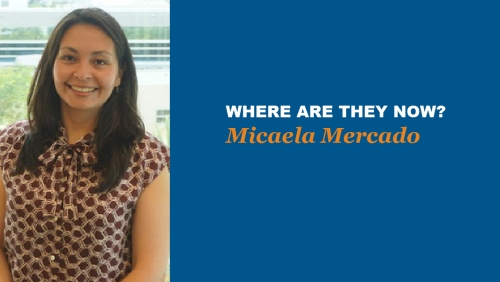
This is the second in a series of Q&As with past participants in MDRC’s Judith Gueron Minority Scholars Program to hear their reflections on their experiences at MDRC and to learn what they’re up to today.
Learning from the New York City Demonstration (2016-2018)
A change in state law presents an opportunity for organizations to access administrative wage data to help evaluate and improve their workforce programs. This guide, based on lessons from the Change Capital Fund economic mobility initiative, explains some of the challenges involved and offers practical advice for interested community organizations.
The June post for MDRC’s operations web series, In Practice: Lessons for and from Practitioners, features eight steps to recruiting new participants in community improvement programs. MDRC field liaisons highlight tailored tips and practical advice to help staff members enroll new participants and maximize the full capacity of their programs.
Introducing the Procedural Justice-Informed Alternatives to Contempt Project
Procedural justice centers on the idea that individuals’ perception of the fairness of a process determines how they respond to it. In this random assignment demonstration, child support programs are applying this principle to reframe their work with families as a respectful, problem-solving endeavor.
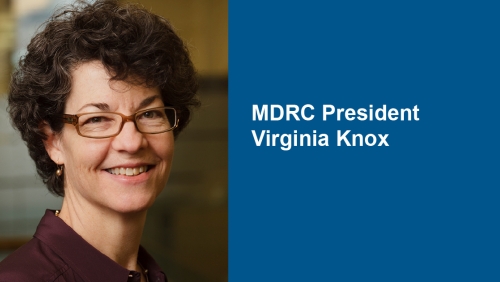
Ramon Robinson of the Association for Public Policy Analysis and Management interviewed MDRC Vice President Virginia Knox about the role of mixed-methods research in evaluating social programs and about her vision for the methodology.
This report presents early impacts on an alternative rent policy designed to reward work among housing voucher recipients. The policy increased earnings in two of four locations, reduced administrative burdens in all four housing agencies, and somewhat reduced tenants’ rent and utilities expenses and their likelihood of exiting the voucher program.
A central element of effective social programs is reaching the target population. Establishing clear and achievable enrollment benchmarks can help programs do just that. This post uses the example of enrollment to establish specific steps that can help practitioners meet benchmarks that are realistic, well-defined, and robust.
As an alternative to random assignment, a regression discontinuity design takes advantage of situations where program eligibility is determined by whether a score exceeds a threshold. With careful attention to assumptions, analysis, and interpretation, this quasi-experimental design can provide rigorous estimates of program effects. Reflections on Methodology outlines some considerations.
This study, implemented at two community college systems in Texas and one in California, tested whether biweekly disbursements of financial aid rather than lump sum payments could help students budget more efficiently and improve their academic and financial outcomes. Overall, this approach did not have substantial impacts on student outcomes.
Lessons on Advancing Latino Success from California’s LATIDO Project
Latinos are California’s fastest growing population, but less than one in four earn a college degree. A new study from the Latino Academic Transfer and Institutional Degree Opportunities (LATIDO) project examines how five California Hispanic Serving Institutions are working to improve the college achievement rate of this community.
Increasing Child Support Order Modification Review Completion in Ohio
In Ohio, the process to modify a child support order has two stages that typically take more than 100 days to complete. In two counties, the Behavioral Interventions for Child Support Services team worked with local agencies to test four interventions designed to simplify the process.
In a new feature — Where Are They Now? — Delia Kimbrel, Director of Research and Analysis at ImpactTulsa, reflects on her experience as a doctoral fellow in MDRC’s Judith Gueron Fund Minority Scholars Program and what it meant for her career.