Founded in 1974, MDRC is committed to improving the lives of people with low incomes. We design promising new interventions, evaluate existing programs, and provide technical assistance to build better programs.
MDRC develops evidence about solutions to some of the nation’s most difficult problems. Explore our projects and variety of products, including publications, videos, podcast episodes, and resources for researchers and practitioners.
Presented Before the U.S. Senate Committee on Health, Education, Labor, and Pensions
On August 5, Lashawn Richburg-Hayes testified before the U.S. Senate Committee on Health, Education, Labor, and Pensions on what research evidence suggests about the best ways to improve the academic success of low-income college students.
Using Behavioral Insights to Encourage People to Participate
Several low-cost behavioral messaging interventions boosted participant attendance at an optional informational meeting for Paycheck Plus, an earnings supplement program in New York City. This test is part of the Behavioral Interventions to Advance Self-Sufficiency project, sponsored by the federal Administration for Children and Families.
Using Behavioral Economics to Increase Child Support Payments
A low-cost behavioral intervention produced a modest increase in the number of parents in Franklin County, Ohio, who made at least one child support payment over four months. This test is part of the Behavioral Interventions to Advance Self-Sufficiency project, sponsored by the federal Administration for Children and Families.
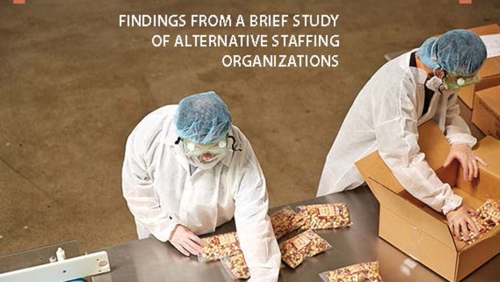
Findings from a Brief Study of Alternative Staffing Organizations
Temporary agencies have become an increasingly important employer of low-skilled, low-wage workers. Alternative staffing organizations that use this model to serve disadvantaged workers (such as welfare recipients and people with disabilities) appear to fill a need, but they must build the capacity to run a viable, competitive business.
Results from three random assignment studies at New York City community colleges suggest that year-round financial aid can increase enrollment during the summer and winter sessions — and that summer and winter enrollment can help students earn more credits.
Results from a Performance-Based Scholarship Experiment
This random assignment study examines the long-term impacts of a program at The University of New Mexico offering low-income first-year students enhanced academic advising and financial aid that is contingent on performance. It finds that the program increased credit hour accumulation during the first two years and graduation rates after five years.
Interim Findings from the Work Rewards Demonstration in New York City
This report presents four-year findings from a test of three interventions: the Family Self-Sufficiency (FSS) program, FSS plus cash work incentives, and cash work incentives alone. FSS+incentives improved employment and earnings among participants who were not working at study entry, but none of the interventions had impacts for participants overall.
The Workforce Innovation and Opportunity Act (WIOA) emphasizes targeting out-of-school youth with training and services that are employer driven and linked to labor market demand. Drawing upon available research and on-the-ground experience, this paper summarizes existing knowledge that can guide implementation of key WIOA provisions for serving out-of-school youth.
MDRC’s Projects in Math for Low-Income Students, from Preschool to College
In our increasingly technological world, developing basic math skills is crucial. What can be done to promote more effective math education? This two-page issue focus describes a number of MDRC projects — from preschool to postsecondary education — that seek to improve the performance of low-income students in math.
Interim Findings from the Performance-Based Scholarship Demonstration in California
This report presents early findings from a random assignment evaluation of performance-based scholarships targeting college-bound high school seniors in California. The scholarships were completely portable, meaning that a student could use them at any accredited, degree-granting college or university.
Through the Innovative Professional Development (iPD) Challenge, the Bill & Melinda Gates Foundation is helping school districts and networks redesign their professional development systems. This brief — the first in a series — introduces the case study component of MDRC’s evaluation and presents some early findings from interviews with teachers.
One-Year Impact Findings from the Youth Villages Transitional Living Evaluation
This study evaluated a program, called YVLifeSet, that offers individualized services to young people who are making the transition from foster care or juvenile justice custody to independent adulthood. After one year, the program increased earnings, reduced homelessness and material hardship, and improved outcomes related to health and safety.
In this two-page issue focus, four advisers from MDRC’s College Match project describe how serving as “near-peer” advisers to moderate- and high-achieving high school students from low-income families influenced their own career trajectories.
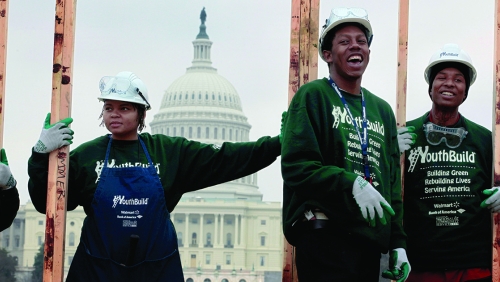
Youth development is a cornerstone of the YouthBuild program, which provides job skills training, academic support, counseling, and leadership opportunities to low-income, out-of-school young adults. Participants attested to the transformation that can occur in an early 1990s study; a 2014 survey of program directors largely reaffirms this.
Changing School Practices During the Second Year of Diplomas Now
Diplomas Now, a partnership of three national organizations, aims to increase graduation rates in high-risk schools, targeting support to students who need it most. This second report finds that Diplomas Now schools are differentiating themselves from comparable schools in their implementation of structural and instructional reforms.
Easing the Transition to Adulthood for Vulnerable Young People
This infographic describes MDRC’s results from the largest random assignment evaluation of a program serving youth people aging out of the foster care and juvenile justice systems. After one year, YVLifeSet, a program run by Youth Villages, boosts earnings, increases housing stability and economic well-being, and improves outcomes related to health and safety.
MDRC’s Aid Like A Paycheck evaluation is testing whether the distribution of financial aid to students in biweekly payments over the course of a term — like a paycheck — can improve academic and financial outcomes for low-income community college students. Here are answers to some frequently asked questions about the project.
An Introduction to the Subsidized and Transitional Employment Demonstration and the Enhanced Transitional Jobs Demonstration
Targeting “hard to employ” groups, transitional jobs programs use a range of approaches. Some place participants into fully subsidized, temporary jobs to gain work experience; others place recruits into permanent positions with a temporary wage subsidy; and others combine methods. This report introduces the evaluation of 13 distinct programs.
RExO increased the number and types of services received by participants and improved their self-reported labor market outcomes as well. But there is little evidence it had any impacts on recidivism or other outcomes. Further, the impacts on employment, while statistically significant, are quite small in practical terms.
This random assignment study examines the long-term impacts of a community college program offering financial aid that is contingent on academic performance. Focusing on low-income parents, mostly mothers, it finds that the program decreased the time it took students to earn a degree but did not increase employment or earnings.