MDRC in the News
The Detroit News

How Transportation Barriers Can Derail College Dreams


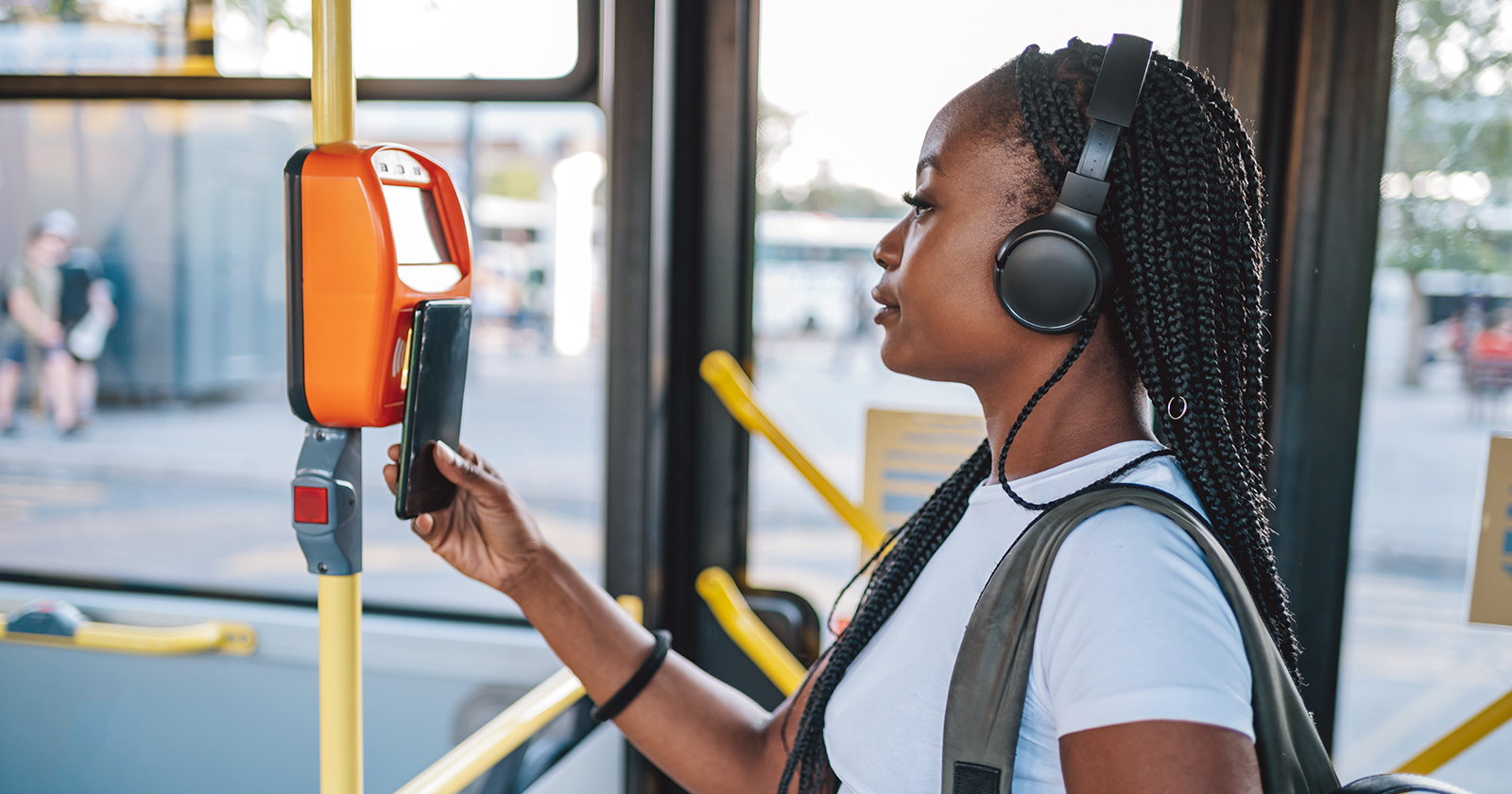
Every Tuesday and Thursday at 6 a.m. Jasmine leaves her family’s apartment in Weston, Florida, hoping that rush-hour traffic won’t make her late for her 8 a.m. class. She doesn’t own a car, so she borrows her mother’s car when she can. On the days she can’t borrow a car, she juggles two bus transfers that stretch the commute by another half hour, assuming that the buses are on time. After her classes, she heads straight to her part-time job or, on days when she isn’t working, home to care for her younger siblings. If she misses one bus, her carefully balanced schedule can unravel.
Jasmine’s story is far from unique. It reflects the daily reality of many postsecondary students who juggle school and work schedules, long commutes, limited and costly transportation options, and caregiving and other responsibilities. Access to reliable and affordable transportation is an important but often overlooked factor in student success. Ensuring students’ access to such transportation requires practical solutions that take students’ needs and insights into account.
Recent studies have documented transportation insecurity among students and the effects of these barriers on everything from whether students enroll in college and succeed in earning a degree, to whether students are able to maintain their mental health.[1]
Structural barriers, such as limited transit options and unreliable service, can determine whether students attend the college of their choice, make it to class on time, consistently attend classes, or take on a job to support themselves.[2] These challenges also affect their ability to access healthcare or manage caregiving responsibilities. When getting from home to campus is too costly, too slow, or too unpredictable, fulfilling school, work, or caregiving responsibilities may simply be impossible.
But transportation insecurity is not just about logistical hurdles, it also has more subtle behavioral implications, shaping how students make decisions and navigate their education. Minor hassles, like a missed transfer or an unclear route, can lead students to avoid early or late classes or skip optional support sessions. Over time, these challenges, which are individually small but collectively taxing, can result in students shifting their priorities and can widen the gap between those who persist and those who fall behind. Students may begin skipping class, disengaging from school, or opting out entirely.
The transportation landscape in the United States varies from one region to another, shaped by differences in geography, infrastructure, and the availability of alternatives to driving. Consequently, students’ needs and the barriers they face also vary.
To understand how transportation barriers affect students’ daily lives, MDRC’s Center for Applied Behavioral Science partnered with Florida Atlantic University (FAU), a large, commuter-serving institution in southern Florida. The region’s long distances and limited transit options make having access to a car essential. Alternatives such as walking, biking, or using public transportation are not common.
FAU researchers surveyed 427 students and found the following:
In focus group discussions, students also emphasized how much mental energy transportation insecurity consumes. One student said, “You're just constantly planning around traffic, construction, parking, delays…. It gets exhausting.” Another student shared, “I was spending hours trying to get to campus by bus, and it just wasn’t sustainable. I had to get a car, and I went into debt to do it.” Car ownership brings a sense of control, but also steep monthly expenses: In focus group discussions, students reported paying $200 to $300 a month on gas alone. Maintenance and repair costs could add up to thousands of dollars more.
Although FAU’s situation highlights challenges that are specific to one region, inadequate attention to transportation as a barrier to student success is a nationwide problem reflecting larger institutional blind spots.
Universities rightly invest in tutoring, advising, mental health services, and other types of support for students; however, they often overlook transportation and whether students can get to where they need to be reliably and affordably. When transportation is considered, it’s often seen as a problem that can only be solved with major infrastructure investments that are costly and can take a long time. However, the issue is not just what is missing in terms of infrastructure, but rather the disconnect between what is offered and what students actually need.
Even when transportation support exists, in the form of, for example, discounted transit passes, emergency ride programs, and campus shuttles, it often goes unused. In focus group discussions at FAU, students described services that were poorly promoted, hard to use, or out of alignment with their schedules or safety concerns. One student only learned about Florida’s Guaranteed Ride Home program, a welcome alternative to paying for an emergency Uber, during the focus group. A survey of students from 91 postsecondary institutions found that only 8 percent of students who missed classes due to transportation issues used public transportation assistance.[3] In another study, 35 percent of students who were offered free transit passes never picked them up, and pickup rates declined over time, even though 90 percent of students reported that public transportation was at least somewhat unaffordable.[4]
When asked what would help, FAU students didn’t call for sweeping changes. They listed practical improvements instead, such as access to real-time bus arrival information, safer waiting areas, better shuttle routes, and discounted ride-sharing services.
Behavioral science, paired with user-centered design, can help reframe the approach to transportation challenges. Rather than starting with assumptions, it is important to understand the full range of student experiences. A traditionally aged student living at home in a major city faces very different transportation realities than does an adult student balancing work and caregiving responsibilities in a suburban or rural area. Designing better solutions starts with understanding not just students’ diverse needs, but the specific barriers that prevent them from using existing resources. Such solutions need to identify where systems break down in practice and then improve current offerings or develop new ones that are better aligned with how students live, move, and make decisions. A behavioral science approach might involve simplifying access to ride-sharing services, using timely reminders for shuttle services, reducing perceived risks with clearer safety cues, or redesigning signs and apps to make navigation intuitive. The goal of this approach isn’t just to offer options, it is to make the right ones easier to notice, trust, and use.
Investing in transportation provides a multiplier effect. When students can get to their campus, work, and care responsibilities reliably, every other investment, such as in financial aid, academic advising, and mental health services, has a better chance of succeeding. Beyond mobility, access to transportation promotes access to education, strengthens the workforce, and enhances economic opportunity. Building a stronger base of evidence is vital to this effort. Researchers should focus on how transportation barriers affect continued enrollment, employment, and well-being, and how targeted support services can improve outcomes, particularly for students from historically underserved communities.
Collaboration among different stakeholders that goes beyond research is also necessary. Colleges can survey students about transportation needs and improve awareness and access to existing support services such as shuttles, ride-sharing programs, and discounted fares. Technology that aids in route planning and delivers real-time information can also be provided through mobile apps or other types of digital infrastructure, helping students navigate options more effectively. Policymakers can fund pilot programs and flexible grants that link transportation access to student success and workforce goals. Funders can invest in research and real-world testing of transportation solutions, especially those solutions that are designed with students and informed by behavioral science. Employers can partner with colleges to offer transit subsidies, shared shuttles, or flexible schedules for student workers.
Transportation is a basic need, and meeting this need is not only a matter of equity, but of effectiveness. Building systems that make it easier for all students to move forward, literally and figuratively, is imperative.
This issue focus was sponsored by Yield Giving/MacKenzie Scott.
[1] The Hope Center for Student Basic Needs, 2023–2024 Student Basic Needs Survey Report (Temple University, 2025). Available at: https://hope.temple.edu/research/hope-center-basic-needs-survey/2023-2024-student-basic-needs-survey-report; Anthony Schuette, Transportation as a Pathway to Higher Education: Student Success Toolkit (Trellis Strategies, 2023). Available at: https://www.trellisstrategies.org/wp-content/uploads/dlm_uploads/2023/11/Toolkit_Transportation_FINAL.pdf.
[2] Carla Fletcher, Allyson Cornett, Jeff Webster, and Bryan Ashton, Student Financial Wellness Survey: Fall 2022 Semester Results (Trellis Strategies, 2023). Available at: https://www.trellisstrategies.org/wp-content/uploads/2023/05/SFWS-Aggregate-Report_FALL-2022.pdf.
[3] The Hope Center for Student Basic Needs (2025).
[4] The Hope Center for Student Basic Needs and City University of New York, Free MetroCards and College Retention: Advancing Transportation Solutions for Community College Students (Temple University, 2025). Available at: https://hope.temple.edu/cuny-transportation-solutions-community-college.