
YouthBuild Evaluation


Overview
The realities of today’s labor market pose a particular challenge for out-of-school youth, who are no longer connected to institutions designed to provide them with training and link them to good jobs. YouthBuild is a “second chance” program for these young people. Founded in the late 1970s in Harlem, YouthBuild now operates in more than 250 locations in nearly every state, as well as in more than 15 other nations.
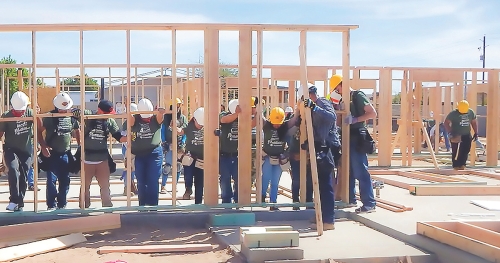
In 2010, the U.S. Department of Labor (DOL), with initial support from the Corporation for National and Community Service (CNCS), awarded a contract to MDRC and its partners Social Policy Research Associates and Mathematica Policy Research to conduct an impact evaluation of YouthBuild. At the time of the evaluation, YouthBuild provided construction-related training, educational services, counseling, and leadership development opportunities to low-income, out-of-school youth ages 16 to 24.
The evaluation included 75 programs across the country that received funding from either DOL or CNCS, and nearly 4,000 young people enrolled in the study between 2011 and 2013. The evaluation examined YouthBuild’s effects on the young people it serves, assessing effects on a wide range of outcomes, including education and training, work and earnings, youth development, and involvement in the criminal justice system.
After four years, YouthBuild had positive effects on some important outcomes. The program led to a sizable increase in high school equivalency credential receipt. The program also increased college enrollment, although it had only a very small effect on degree receipt. YouthBuild led to an increase in employment and earnings at the four-year point, as reported on a survey, but there were no significant effects on work reported to the unemployment insurance system. The program increased civic engagement but did not have effects on other measures of youth development or on rates of involvement with the criminal justice system. The evaluation also included a cost analysis.