Founded in 1974, MDRC is committed to improving the lives of people with low incomes. We design promising new interventions, evaluate existing programs, and provide technical assistance to build better programs.
MDRC develops evidence about solutions to some of the nation’s most difficult problems. Explore our projects and variety of products, including publications, videos, podcast episodes, and resources for researchers and practitioners.
This is the fourth in a series of briefs highlighting strategies to increase educational equity by addressing students’ social and emotional needs. It describes how three school systems are moving toward whole-system approaches focused on healing, prevention, and cultivating psychologically safe and supportive environments for all.
In this commentary originally published by WorkShift, Deondre’ Jones describes how the WorkAdvance initiative helped reduce racial employment disparities for Black and Latino adults. He also explains important components that program providers may want to include to better support participants of color.
Dual Enrollment Impacts from the Evaluation of New York City’s P-TECH 9-14 Schools
The New York City P-TECH 9-14 model offers accelerated high school course work, early college, and work-based learning experiences. P-TECH students are 30 percentage points more likely to take college courses in high school than comparison group students. They also earn 6.4 more college credits by the end for their fourth year.
A Model for Postsecondary Career and Technical Education
This brief highlights lessons from the City Colleges of Chicago Centers of Excellence model, which has redesigned each of the system’s seven campuses as a “college-to-career center” and consolidated academic programs in high-demand industries at particular campuses.
Tribal Colleges and Universities (TCUs) are well positioned to provide educational experiences aligned with Native American students’ goals. This brief highlights the important role TCUs play in Native American communities and offers policymakers recommendations for supporting TCUs in increasing college completion for Native American students.
This brief outlines how Head Start programs responded to the ever-evolving public health emergency caused by the COVID-19 pandemic—shifting activities to virtual formats, adapting in-person activities to local restrictions, and maintaining connections with families and community providers.
Lessons from an Implementation Study of the Procedural Justice-Informed Alternatives to Contempt Demonstration
The Procedural Justice-Informed Alternatives to Contempt (PJAC) project integrated procedural justice (the idea of fairness in processes) into enforcement at six child support agencies. This report presents the first systematic analysis of the implementation of the PJAC model.
This brief examines Park City Career Pathways, a program aimed at addressing gaps in support for young people who are making the transition from high school to college and the workplace in a possible “COVID recession.” It offers lessons for other communities that may be interested in launching similar efforts.
An Introduction to the Strengthening the Implementation of Responsible Fatherhood Programs (SIRF) Study
This report summarizes activities in the first two years of the Strengthening the Implementation of Responsible Fatherhood Programs (SIRF) study (2019 to 2021). SIRF aims to identify and test approaches to improving programs’ recruitment, engagement, and retention of fathers using rapid learning cycles.
Grameen America provides microloans to women living in poverty seeking to launch or expand small businesses. The program resulted in a reduction of material hardship and an increase in credit scores, business ownership, business earnings, and nonretirement savings. It also improved participants’ feelings of overall financial well-being.
In this commentary originally published by Early Learning Nation, JoAnn Hsueh, director of MDRC’s Family Well-Being and Children’s Development policy area, describes three evidence-based strategies that can help increase child care workers’ opportunities for advancement and upward mobility.
This brief prepared for the Center for the Analysis of Postsecondary Readiness presents interim findings from a random assignment evaluation of the Dana Center Mathematics Pathways (DCMP) program at four Texas community colleges. It also includes an exploratory analysis of the effectiveness of the program for various subgroups.
Drawing on lessons from the Procedural Justice-Informed Alternatives to Contempt (PJAC) project, this guide provides practical advice on how child support agencies can apply principles of procedural justice (the idea of fairness in processes) to build trust, better engage participants, and create a more fair and effective process.
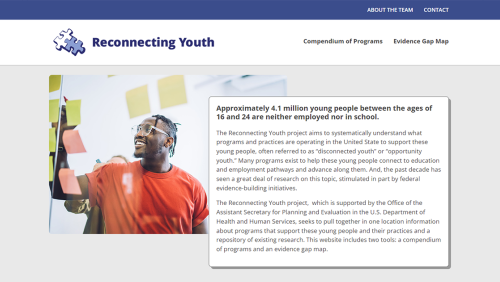
An Analysis of Programs Serving Young People Not Connected to School or Work
This report, a companion to an online compendium, offers findings from a systematic analysis of programs supporting young people who experience disconnection from school and work during the transition to adulthood. It focuses on services to help them reconnect to education, obtain employment, and advance in the labor market.
A San Diego program used IPS to help people with a range of disabilities find employment. This report summarizes 15-month evaluation findings from an earlier report and presents new impact findings. Of note, the analysis found the program increased earnings by almost $4,000 over the two-year follow-up period.
Sectoral strategies train people for industries with strong local demand. This report summarizes the Year 7 findings of an evaluation of WorkAdvance, a sectoral training initiative launched in 2011. Overall, the results show that sector programs can increase earnings in the longer term and can lead to career advancement gains.
Final Impact Findings from the Paycheck Plus Demonstration in Atlanta
Paycheck Plus expanded the Earned Income Tax Credit for single workers with low incomes and without qualifying children in two cities, offering a tax credit of up to $2,000. This report presents three-year findings from the program in Atlanta.
The information technology (IT) sector has great potential to help workers with low incomes improve their prospects in the labor market. This review examines the IT training offered by an employment services provider in New York and the impact such training had on career advancement opportunities for program participants.
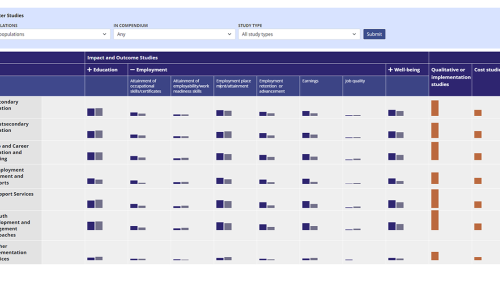
This report, a companion to an online evidence gap map, presents findings from an analysis of 60 studies of programs to support young people who experience disconnection from school and work during their transition to adulthood. The evidence gap map provides insights into what evidence exists and where there are opportunities to build evidence.
In 2020, MDRC and its partners conducted a literature review and held a series of conversations on the subject of engaging fathers in fatherhood programs that included practitioners, fathers, researchers, policymakers, and other stakeholders. This publication collects engagement approaches practitioners and other stakeholders have tried or are considering.