Founded in 1974, MDRC is committed to improving the lives of people with low incomes. We design promising new interventions, evaluate existing programs, and provide technical assistance to build better programs.
MDRC develops evidence about solutions to some of the nation’s most difficult problems. Explore our projects and variety of products, including publications, videos, podcast episodes, and resources for researchers and practitioners.
Results from the Mother and Infant Home Visiting Program Evaluation
Adverse experiences in children’s earliest years can negatively affect development. Home visiting for expectant parents and families with young children can help, but implementation research is scant. MIHOPE, a national evaluation of a federal home visiting program, is examining 88 local programs across four evidence-based models to learn about their implementation and impacts.
By combining prior beliefs about a program’s effectiveness with new data to produce a distribution of impacts, Bayesian statistics provides an alternative to classical methods that may be more useful for policymaking. Reflections on Methodology discusses some issues with and applications of this approach.
With its new Center for Data Insights, MDRC is furthering its long-standing commitment to helping our partners improve their programs and systems. This issue focus describes how the Center is assisting government agencies, educational institutions, and nonprofit organizations use their data better to refine and target their services.
This paper reports outcomes for community college students who took modularized, self-paced, computer-assisted, remedial math courses with outcomes of students who took “traditional” (that is, mostly lecture-based) classes. Modularized courses were no more (or less) effective than traditional courses at helping students complete their developmental math requirements.
Studying implementation is a multidisciplinary exercise requiring careful planning and coordination. This post, the first of several from the Implementation Research Incubator describing the processes and procedures of MDRC’s work, shows how a wide array of staff members contribute to the effort.
Learn and Earn to Achieve Potential (LEAP) is an initiative to help young people who have been involved in the foster care or juvenile justice systems, or who are homeless. This brief provides details on the models in LEAP and the young people participating, and offers some early implementation findings.
Lessons from the New York City Change Capital Fund’s Economic Mobility Initiative (2014-2018)
A group of 17 donors are collaborating to provide multiyear funding to help community organizations build data capacity and integrate services — an uncommon opportunity. This report reviews the progress made among the first round of grantees and considers lessons involving donor expectations, technical assistance, and stakeholder involvement.
Early findings show that using multiple measures to assess college readiness reduces the number of students placed in remedial classes and increases the number who enroll in and complete college-level math and English.
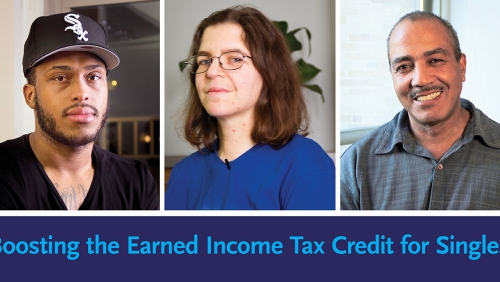
Final Impact Findings from the Paycheck Plus Demonstration in New York City
Paycheck Plus raises the top tax credit for low-income workers without dependent children from $500 to $2,000. In a three-year test, the program increased after-credit earnings, reducing severe poverty; modestly improved employment among women and more disadvantaged men; and led to more noncustodial parents paying child support.
This paper reviews the available evidence supporting various types of career and technical education programs, touching on both the amount of evidence available in each area and its level of rigor.
Subsidized Employment Programs Serving American Indians and Alaska Natives
This report describes the ways in which eight TANF programs primarily serving American Indian and Alaska Native (AIAN) families use subsidized employment. It found that their use of subsidized employment has the potential to provide work opportunities for AIAN individuals with limited work experience and barriers to employment.
The fourth in a series from the Chicago Community Networks study, this web feature explores how partnerships within local collaborations can both sustain themselves and adapt in the face of external events, using one Chicago neighborhood as a case study.
Final Impacts and Costs of New York City's Young Adult Internship Program
This report presents 30-month impacts from a random assignment evaluation of a program that subsidized employers to offer temporary paid jobs to young people who were disconnected from school and work in New York City. After 30 months, program enrollees and nonenrollees fared similarly, with the former slightly more likely to report employment.
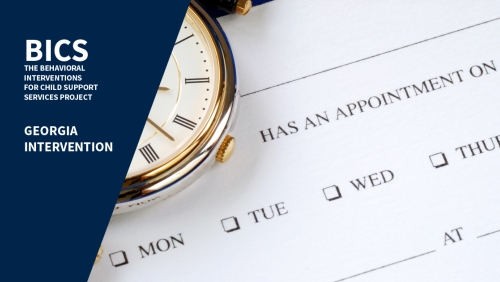
An essential step in the child support process is delivering legal documents to the person named as a parent. This infographic summarizes results from a Georgia intervention that aimed to get parents to come in and accept documents voluntarily instead of using a sheriff or process server to deliver them.
Using Behavioral Science to Encourage Postsecondary Summer Enrollment
Community college students who enroll in summer courses are more likely to graduate, but most do not attend during the summer. The Encouraging Additional Summer Enrollment (EASE) project uses insights from behavioral science to encourage more students to enroll in summer. This brief presents EASE’s Phase I findings.
In the second of two posts on the research opportunities presented by school choice systems, Reflections on Methodology discusses a few issues common to lottery-based analyses — constrained statistical power, imperfect compliance, and restricted generalizability.
Developing a Smartphone Application with Fathers, for Fathers
Fathers in Responsible Fatherhood programs can face numerous barriers to remaining involved with their children. This brief describes how MDRC collaborated with fathers to develop DadTime, one of the first smartphone applications designed specifically to help fathers improve their engagement with and attendance at parenting programs.
A Guide to Launching a Multiple Measures Assessment System
To address underplacement, in which students who could succeed in college-level courses are directed into developmental education, community colleges have begun supplementing the typical placement test with measures like high school GPA and noncognitive assessments. This guide walks colleges through the process and pitfalls of undertaking this kind of reform.
To help City University of New York (CUNY) students referred to developmental (remedial) education, CUNY Start delays their enrollment in a degree program for one semester of intensive instruction. This report describes students’ progress through developmental education after one semester, and college enrollment in the semester thereafter.
One in five U.S. children live in poverty. This review examines how children and parents think and feel about poverty and public benefits, as well as how families discuss their economic circumstances. Children report awareness of both material deprivation and stigma.