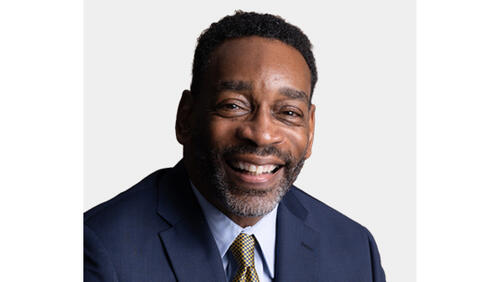

Host: Leigh Parise
Producers: Katya Manna and Jonny Poilpré
Policymakers talk about solutions, but which ones really work? MDRC’s Evidence First podcast features experts—program administrators, policymakers, and researchers—talking about the best evidence available on education and social programs that serve people with low incomes.
Latest Episode
Transcript
Leigh Parise: Policymakers talk about solutions, but which ones really work? Welcome to Evidence First, a podcast from MDRC that explores the best evidence available on what works to improve the lives of people with low incomes. I'm your host, Leigh Parise. As the global economy has grown increasingly competitive, interest in career and technical education, or CTE, has experienced a resurgence among policymakers and educators as a way to ensure that more students leave school prepared for well-paying jobs.
The result has been many new, innovative programs at both the secondary and postsecondary education levels that seek to give students technical training for specific careers, durable skills training to prepare them for the workforce, and work-based learning opportunities where they can get hands-on experience and develop connections to employers and the workforce. Joining me today is Kate Kreamer, executive director of Advance CTE, the national nonprofit that represents state CTE directors and state leaders of career and technical education. Kate, welcome to Evidence First.
Kate Kreamer: Hi, Leigh. Thank you for having me.
Leigh Parise: We're really excited to talk about this. As you know from your close work with some of my colleagues like Rachel Rosen, CTE is a really, really important topic for us here at MDRC and I know you share that. Why don't you start by telling us a little bit about Advance CTE and its mission?
Kate Kreamer: Advance CTE is a national membership policy and advocacy organization that represents state leaders who oversee career technical education across secondary, postsecondary, and workforce development systems. We represent over 50 states, DC, and territories, working with largely state-level leaders who sit within state education agencies, community and technical college systems, boards of regents, workforce development agencies, and the like. We serve as a place for professional development and professional learning, as well as being their voice in Washington, DC, with the administration and Congress. We say we're a state leadership organization. We help states be the leaders they need to be in this space, so that they can be designing the high-quality and accessible CTE programs, pathways, and experiences to reach and support every single learner across the country.
Leigh Parise: Great, thank you so much. I hope that there are some people who, if they didn't know you, now they'll get to know you and they'll go check out what you're up to. You've written about the importance of breaking down the wall between academic and technical education, but a lot of people see these still as two separate tracks for students. Can you talk a bit about this dichotomy and why you see it as an outdated way to think about CTE?
Kate Kreamer: Thank you for this question. It is one of my, I would say, favorite topics, one of my favorite things to talk about. I've been working in the college and career-readiness space for over 20 years, and so have seen the pendulum swing back and forth. I think there are a lot of issues and reasons not to continue siloing core academic and technical education. Those are also, I think, placeholders for college and career. I think those often get muddled together. And I think the dichotomy does not make sense, one, because they're not actually in conflict. It is not an either/or. It is now validated by quite a bit of research coming out of the CTE research network and elsewhere, that CTE students are just as likely to go on to some form of college as their non-CTE peers. They might be more likely to go to a two-year institution than a four-year, but that is still college and they still need academics to prepare for that.
At the same time, for students that are not in CTE, they still need to have strong, career-ready, durable skills. They still need to be prepared for this really evolving world of work where traditional academic pathways may not actually be the best way to do so. The other place of this is, as good jobs require a strong academic foundation, CTE programs are leaning in to provide academics. And as students want more engagement, I think you're seeing a lot of conversation of how to expand experiential learning. So there's a lot of policy implications of continuing to pit these against each other. There's implications for missed opportunities around student engagement.
That is a whole conversation given the crisis we have with chronic absenteeism among our middle schoolers and high schoolers. CTE students are much more likely to stay engaged in school and graduate high school. But at the end of the day, it's really about mindset, and the mindset is what perpetuates the policies and the programs and the disconnect. The idea that, "CTE is great, but not for my kids." And we have not got past that, despite, as we'll talk, I'm sure, throughout this, how CTE has really raised the bar for itself and is delivering the things that kids are asking for.
Leigh Parise: As you were saying, parents might think, people might think, "CTE is great, but not for my kid." I was going to say, what do you say to those people? But you did just end with that: They're engaged, there are real opportunities, it's really changed. I don't know if there's anything else that you would say to people to help them understand why that's just not the right way to think about it.
Kate Kreamer: We can talk about it, we can explain it. I think part of the challenge until you see it, it's really hard to understand what CTE really is and what it isn't. We have found this for years when we've done polling of families and learners, it's a black box to people. They just don't actually understand. Their whole perspective is what they experienced when they were in high school—and 20, 30, 40 years ago, it was different. We'll talk about that as well. But I think if you go into a high school that has meaningful CTE programs, you will say, "Oh my God, I wish I had this," which is what most adults say when they see real, authentic, meaningful CTE. I think another part of the challenge is we have a branding challenge.
One, people may or may not like the CTE, but I have met many young people—one of our babysitters who was a senior in high school, who was in a biotech pathway in an academy at the high school that my kid will go to. She had never heard of the word CTE, did not know she was in a CTE program. My husband helped explain what it was on my behalf. That student will go on to a four-year college, will go on and continue to pursue her path, but there is a lack of understanding for students that are actually in CTE, that they're in it, for some. It's just really hard to describe. You can say all the things, but until you are there and seeing the type of work these students are doing, the engagement, the leadership skills, the agency they have, data and research will only get us so far to make the case.
Leigh Parise: I think that's totally right. Also, I have to say, power to your husband for being able to explain what you do well, that's good. And in my experience, one of the best and most challenging things about doing the kind of work that we do with schools is that everyone went to school. It's really hard for them not to bring all of that into any conversation about school that you're having. I had the opportunity to visit all of the P-TECH schools in New York as part of our P-TECH study. I completely agree that when you are in a school and you see what is happening, of course you would want your kid to get to be excited by that and engaged in that and learning from that.
Kate Kreamer: Coming back to your first question, there are policies out there that are disincentivizing CTE. Because I want to say to every parent, "CTE is not going to close any doors," and it shouldn't close any doors. But if you've got states that are building requirements that are saying, "If you take more CTE, you don't have to take the math that's required to go for admissions to our flagship four-year institution, or we're going to lower the cut score for you, and other things," then you are in fact. Or there's policy going on in the states right now to say that CTE dual enrollment should be weighted less than other dual enrollment within your GPA for students.
These have real implications. As an advocate, I believe that CTE, when designed right, does not close a single door for students. But there are policies that unfortunately are now focusing on the career, not the college. Again, treating those as a dichotomy versus really saying it needs to be both. There is good evidence that when students take a CTE program of study and complete a college prep curriculum, those students are the best prepared in terms of postsecondary enrollment, completion, and even wages. There's some research from Virginia a couple years ago and Kentucky years ago, a little bit dated, but I think it holds. I cannot imagine that any of that has shifted, because it's giving students the best of both worlds.
Leigh Parise: I really appreciate those specific examples because that helps policymakers and practitioners also understand the potential implications of certain decisions that are being made. I will also say it's a little hard for me not to nerd out on all your references to evidence and data. Thank you, let's come back to that.
You've talked about how things have shifted over time in this world of CTE. In the last several decades or so, there has been this move toward CTE innovation such that most schools and students nationally now engage in some kind of CTE education. It sounds like maybe they're not all calling it out as that, but I know Advance CTE recently modernized their Career Clusters framework that states use to guide the development of their own CTE programs. I know my colleague, Rachel [Rosen], has talked about this, as she was part of that group of people who advised on that framework. Can you talk about how you see CTE evolving and how this new framework supports a vision for a more modernized version of CTE for students?
Kate Kreamer: Absolutely. I always love getting the question of, "How is CTE going to evolve and how is it going to meet the moment?" We get that question all the time. "With AI, new technologies, how is CTE going to meet the moment?" And my answer is, that's what CTE is designed to do. We are a program that is over 100 years old. Our first federal investment was 110 years ago, give or take. At that time, it was investing in terminal high school programs, in agriculture, home economics, business, skill trades. It wasn't called that. Because that's what it was in 1920. But over the century, it evolved tremendously as technology evolved, as industry needs evolved, as learner needs evolved in terms of how we are serving disadvantaged students. That's the story of CTE: We have to respond. We can never say the same because our mission is to prepare learners for the world of work, evolving world of work, and that is going to continue changing.
I always preface it with that. That is not a new thing for CTE, that is in our DNA. The Career Clusters framework you mentioned, it's the organizing framework that states use for CTE. It's not mandated. I think the only thing that's required is that states, for their federal reporting of data, have to report against those clusters. Otherwise, it's very much a state decision if they use them, how they use them, and the like. So the initial Clusters framework, which was released in the early 2000s, was really critical for moving us out of the age of vocational education into the age of career and technical education.
And it did so, I think, in two really important ways. One is, it essentially covered the entire world of work as it stood in 2002. It moved us beyond what traditionally was covered by a handful of program areas—ones I've mentioned, agricultural, skilled trades that are still really important, we still need those, and in some ways, we'll talk about skilled trades even more than ever before—but also expanding to have health care, to have STEM careers, to really focus on the growing need of digital technology and the like. I say this all the time: "If you give me a career, I can find a CTE program somewhere in this country that is preparing kids for that career, or at least giving them, if not fully prepared, getting them that first step toward that career." We can have that conversation. I can find that program. The other thing it did was really ushered in this idea of programs of study, which was moving away from terminal programs that you took in high school, you graduated, you went into a job, and you stayed at that job forever.
Acknowledging that every program should have a secondary component and then transition into postsecondary and have a clear path between those two systems, should then have opportunities for things like dual enrollment or early postsecondary, should integrate academic, technical, and employability skills and standards—which is named in that as well—and really trying to recognize that the world of work is not looking for many individuals that don't have experience beyond high school and don't have only technical skills or only academic skills. Then the program of study was then built into the next iteration of Perkins back in 2006, so it now has been institutionalized even further in Perkins V. That's a lot of background.
That was where we were in 2000. It really changed the conversation, changed the game, changed the language, changed the orientation. However, we'd revalidated and revisited it, but we had not really peeled back and said, "This thing needs to be modernized in 20 years." A lot changed in the economy in 20 years. The words robotics, AI, energy, renewable energy, none of that language was in the old framework. It obviously needs to be in the new framework. As we thought about this new framework, or the modernized version, which was released in 2024, it pushed us a couple ways around innovation. One is not only representing the evolving worlds of work, but also recognizing how interconnected work is within and across sectors.
Historically, CTE programs had to fit in a neat box. They're driven by things like course codes, teacher certifications, program approval, restrictions put on a system that have nothing to do with the way work is organized, but absolutely limited innovation and flexibility. So we have these new cross-cutting clusters that are trying to push on that and say, maybe we can desilo, and maybe we need to be looking at what are the experiences, standards, skills, careers that span across different sectors and give us opportunities to be more responsive to a dynamic and interconnected economy.
Leigh Parise: Those lines of connection feel like they are so critical. I wonder, for your constituents—you mentioned working with people at the K-12 level and postsecondary and workforce: how do you balance what their different interests might be in the world of CTE that, as you talked about it, begins in the K-12 space. I wonder if you could say a little bit about how you think about that, or whether you get different kinds of questions from them or different kinds of pushes from them when they're thinking about what things they might need from Advance CTE as an organization, or the policy context in general?
Kate Kreamer: That's a great question. When we started with the Cluster framework, this modernization, the first thing we did was pull labor market information and then organize a set of industry advisory groups to do that. To look at: "Are these the right sectors? Is this the right language? Are these the right skills? What are we missing?" Help us validate what the labor market data is saying and help us think about this from a modernization lens. We then started with industry, started with data, and then we brought it to education to say, "Does this work? Will this work in an education setting? Will this work for learners?" But we very much had it, the “what”: That what students are learning needs to be driven by industry. They need to define what students need to know and be able to do.
The “how”—how you deliver the instruction, how you engage learners—that is a big decision of the educators who are actually doing that work. And frankly, increasingly, learners should be having voice into that as well. We've been doing quite a bit of work, both stand-alone projects to help states and districts stand up youth participant action research around CTE, with CTE learners to inform things like the comprehensive needs assessment. But also being intentional within other projects we're doing of getting that learner input and then using learner input, because they are closest to those experiences.
I think where we have some tensions, what you'll hear often, is sometimes learners and educators really have a lot of attachment to certain programs. They like them, they're fun, they've always had them. Labor market may not justify that there are enough jobs for them. I think that's probably the one tension, is we want to make sure that there's a job at the end of that program, a good job at the end of that program, a family-sustaining-wage-paying job that has benefits, pathways to advancement—and balancing that with student interest. That's part of the work of strength and career advisement, is to close that gap and be able to make those connections clear.
Leigh Parise: Thank you, Kate. That makes a lot of sense. I really appreciate how it's so clear, that you're being incredibly thoughtful about it, and figuring out who are the right folks to engage, and how do we make this meaningful for everybody across the whole pipeline.
Kate Kreamer: Building on that, one other intentional shift we made of the modernized Career Cluster was we added a new layer to the framework, which are these cluster groupings. Historically, we had our Career Clusters, those are the main organizing. We had subclusters, the bundles of careers and programs under those, and then we have curated practice at the center. But we added these purpose-driven megaclusters that are intended to guide learners toward clusters that are aligned with their interests, their sense of purpose, and the impact they want to have in their communities. For example, education, health care and human services, and public service and safety are three clusters that are all nestled under caring for communities as their cluster grouping.
We have advanced manufacturing, construction, supply chain, and transportation all under building and moving. This was actually anchored in research and the evolving culture conversation that younger people want to find purpose in the work they do. I think many people want to find purpose in the work they do, but that's really salient coming up. This also allows for an earlier access point for when a learner starts talking about careers. I recently did a presentation for my son's first grade about my job and Advance CTE. It’s hard to talk about policy advocacy to seven-year-olds, but I figured it out. I created an activity sheet using these six groupings, because even seven-year-olds can begin to understand what they mean at some level.
So it’s not saying, "You're going to be this when you grow up," but, "Which of these resonate?" And having kids say, "I love to help, I want to care for my community." Saying, "I love being outside, I want to cultivate resources," which is under “take care of the earth,” I think is how we rebrand it. "I want to take care of the earth." "I love building things, so I'm interested in this one that has pictures of construction and a fire truck." I think it's really important to think about that. There is research that you can have those kind of conversations early, but you need to have the right language, the right orientation. So I'm pretty excited about those.
Leigh Parise: I love that so much. I have to say, often when I get that email of, "Do you want to come talk at career day," I think, "How do I make this exciting?" It sounds like you succeeded, so thank you. Actually, one of the things that I wanted to talk to you about—and maybe this relates to this idea of there's some connection to young people wanting to have some purpose and to helping kids understand this connection you mentioned, like, "I want to do things that are going to help the earth"—I know Advance CTE recently put out a playbook for how states can address CTE for the clean energy transition. MDRC, I know, has worked on that with you. I think a lot of people still see those kinds of jobs as this really small niche of jobs serving a super-narrow part of the future economy. I would love for you to talk a little bit about the scope of those kinds of jobs and why you think it's important to train students across the CTE spectrum for them.
Kate Kreamer: First of all, thank you to MDRC and Rachel for the amazing partnership on this initiative. We initially were going to be bringing together state leaders and practitioners and labor market, but bringing that research lens to the effort broadened the scope and made it even better, so thank you for that. I get these are niche, but it's hard for me to look at these jobs and think they are niche when we are seeing hundreds of thousands of new jobs being generated around green technology and production and a lot of existing jobs being directed to do projects, initiatives, work that is attached to the green economy. Acknowledging we're in a bit of a slowdown than we were a couple years ago. There's been a big disinvestment by the federal government in clean energy technology, in many investments made around manufacturing and infrastructure, and that has slowed things down to some extent.
Maybe if we're creating less jobs on the front end to mitigate environmental impact, we're going to still need jobs on the other end around the resilience, around the effects of climate change. I think part of the challenge is it's really hard to pin down what a green job is. There's a lot of definitions. We grapple with that. We even grappled with, "Should they be green? Is that the right word?" And felt like, "It's kind of the most generic, it's the broadest, let's go with that." But it's not a formalized definition by any means.
But when you think about it in terms of manufacturing, manufacturing batteries, solar panels, other emerging technology that is around reduction of energy use and the like, being more efficient, and then the skilled trades which are blowing up because of green technology, the need to improve our grid to make the necessary improvement to our infrastructure, the installation of EV chargers and other kinds of technologies, these are good, high-paying jobs that are not going away. You may not look at an electrician and say, "That's a green job," but many of the opportunities for electricians are in companies, industries related to the green economy.
And then I think you're right about the purpose. I'll come back to that. But we're seeing some communities push back against these new data centers. I think it's a great example. There's all these new AI data centers. I live in the DC region, we got some coming in our backyard, but you're seeing some pushback because of the environmental impact. We need better solutions so we can continue to grow our AI capabilities and continue to lead in that industry without overextending our electric grid, without burning through our clean water. These are real-world problems that have to be solved. As you said, what's great about it is that there are a lot of young people who actually want to solve problems just like these.
Leigh Parise: I really appreciate that you can talk through that the way that you just did, because I think sometimes people hear green jobs and they think, "Oh, that's very political." But when you talk about, "These are actually construction jobs and electricity jobs and they affect all kinds of different jobs when you think about green jobs,” I think it's really important to say out loud, so thank you. I promised that I was going to want to come back to data and evidence, and that MDRC has conducted a lot of rigorous evaluations of CTE, including our recent study of P-TECH schools, earlier work on Career Academies among others. I would love for you to talk a little bit about how lessons from data and research inform the policy priorities of Advance CTE.
Kate Kreamer: As I mentioned earlier, the growing research around Gen Z, in younger learners, how they're motivated was really instrumental in bringing those cluster groupings to life. We conducted our own focus groups with middle school, high school, and postsecondary community college students to understand what they were looking for, why they were engaging in these programs, how they talked about it, so we could really be thoughtful. We landed on those cluster groupings to engage younger learners because that felt like a missing piece of the puzzle.
Another place—and this is really timely—is there's a growing body of research around credentials. There's good work out of Texas. Very recently, just in the last week, new research out of Ohio is validating what we know from experience and common sense: Not all credentials are leading to positive learner outcomes or a good return on investment.
Yet we are seeing states throw insane amount of money towards credentials, either incentivizing them, removing barriers, paying for the administration to remove a barrier for students that may not to be able to afford them, building the accountability systems, now with Workforce Pell, a tremendous amount of focused interest. I think it's really important that as we're making those investments, we're doing so with learners and industry in mind, not just having credentials to have them. I think this research has been really helpful in both making the case, but also informing how we are helping states build better policies and structure, and structures to validate those credentials, revalidate those credentials, report on those credentials to ensure that labor and market value for learners.
Finally, we definitely use a lot of data. We don't use as much research. We can talk about that because I think there's a... Well, you hear, we use a lot of research to make the case—as you've earlier identified—in terms of the evidence of why CTE works and why everyone should love CTE as much as we do. But I think we do look at data a lot, and the data is very motivating, particularly when you look at the gaps in the data in terms of both, on the front-end, access gaps and outcome gaps and disparities.
We definitely look at those, and it spurred a lot of work that we have done with over 40 states to use their own data to identify their own gaps, which students are not having access to which programs, which students are not able to engage in meaningful work-based learning or have access to dual enrollment. To do those root cause analyses, really dig in and craft solutions and interventions that will be effective in those contexts. So data is very much at the heart of both motivating us to... We said, “CTE's come a long way, we're not all the way there.” Not 100% of our programs are perfect. It's always nothing is perfect, but I think there is a lot of intention of continuing to push on quality as well as access. And you need data to do so, not only to identify the problem, but also you need the data to really drive the conversation and drive the work.
It is just exciting that there is the research there is at this moment in time. I think you mentioned MDRC—there's this 2008 study that everybody knows. Well, everybody in CTE that's been around for a while knows. There was very, very, very, very little research around CTE for decades because CTE was devalued, it wasn't a priority like it is today. That has shifted. I do think research, that kind of nascent research, did help accelerate some of that. As I said, a lot of the research, how we use research—and again, we're an advocacy organization—but a lot of it is to make the case, to explain, to bust myths about college going and student engagement. Looking at those outcomes, that's really helpful. The case has largely been made, I think from a policy standpoint.
I think the shift that the field is looking for is, we're all doing a lot of things. I mentioned credentials, a great example. All states are building policies, funding models, incentives around credentials. But what is the best way to do that? What is the most effective way? What are the right feedback loops? What are the right questions they should be asking to know which credentials actually do have value? There is good research to be able to start to unpack that, that I think hopefully is shifting how states are thinking about that. We get that in work-based learning. There's a lot of work-based learning. We can, on the front end, know what a high-quality work-based learning experience looks like in terms of the inputs into it, but what are the outcomes associated with work-based learning? I know there's work going on now that does not really exist in terms of the value, as many states and communities are investing time, effort, resources into this.
Leigh Parise: I love that focus and I think that's really important. I'm so glad that you continue to work with your partners and as an organization, push that forward. I guess one of the things, especially from the standpoint of MDRC, it would be great to hear about some of the areas where you're seeing a need for more rigorous evidence to inform the decisions that people are making. As I'm sure you know from your close work with MDRC, it's really important to us that the studies that we are doing—and really everything that we are doing—is focused on answering real questions that people are asking and real decisions that they need to make. I'd be really curious to hear about what you think your constituents are wrestling with: where they need more evidence because they're not exactly sure what decision to make.
Kate Kreamer: We have a lot of models of things like work-based learning. We have a lot of models of how states are tackling credentials, how they're tackling dual enrollment and CTE dual enrollment. Which are the most effective and why? Which are serving learners that have disadvantages, who are less likely, without the intervention of CTE, to have those experiences? Why and how are those being designed with intention, I think, is really important.
Now we're at the refinement phase. We know what the work needs to be. We know where we want to get students. What we need is more research to demonstrate the how. How do we lift the quality across the board and continue to innovate but also refine what's already happening? Also, if you could figure out this whole ROI—I mean, we get asked by everybody, "Where's the ROI on CT? Can you measure the ROI on CTE?" We would love to do that. If you guys could just solve for that, that would be incredibly helpful.
Leigh Parise: I'll send you everything right after this podcast, no problem. No, especially in a time where there's limited resources, I understand that that's a question people are asking, but yeah, it's often harder to answer than people realize. But I really appreciate just your reflections on, "Here's some of the stuff I'm hearing about what people are grappling with, as they're trying to figure out their own work or their own policies and give advice." Maybe if I'm a state CTE director, how am I working with districts to help them think about what might be most effective within their district?
Kate Kreamer: I'll throw one more out there, because we started the conversation talking about, "How do we desilo core academics and CTE?" We just put out a big paper on this, looking at what states were doing, what were the policies, structures, supports they were providing for local leaders to do this work. We had to stop from recommendations because there's very little evidence to demonstrate that the policies being designed—to facilitate more integration, having crosswalk standards, having graduation requirements that allow for certain CTE courses that are validated to have enough math content or enough science content to count for that math or science course, having a journalism course count for an English requirement, for example—we don't know if those policies are being used, we don't know if they're having any effect. We don't know what's happening to students that might take those equivalent courses versus students that don't.
I think this is a tremendous opportunity to—we were talking earlier about, "How do we get every kid into this?" Well, we need to integrate it across the curriculum, we need to just make it seamless. But we also need the research of which of those policies are actually effecting change and leading to better student outcomes. We didn't know, so we had to pull back and say, "We're going to hold back on making some real recommendations of policy, absent having the data." Other than there is some—not a lot, some—research to say, when you bring academic and CTE teachers together and they coteach or they collaborate, there is positive outcomes, both for their satisfaction as well as for student engagement and learning. But the how: How do we design it? How do we structure those policies, those programs? I don't know. Hopefully someone out there is listening and wants to figure it out.
Leigh Parise: I hope so, too. I love that. I also love that we've now come to the end and you've circled us back to the beginning. You are welcome to come back anytime, Kate, truly, it has been a pleasure. We really appreciate you spending the time with us and getting to share what is clearly a lot of deep expertise. Thanks for being here.
Kate Kreamer: Well, thank you, Leigh. This was a lot of fun. I appreciate the opportunity to talk about CTE, and am looking forward to all the partnership opportunities going forward and all the research you're going to provide on ROI, so thanks for solving that problem.
Leigh Parise: This was such a great conversation. I feel like I really learned so much. It's exciting to see how far CTE programs have come over time and to think about all of the opportunities for evidence to inform decisions that need to get made at the policy and practice level. To learn more, visit mdrc.org. Did you enjoy this episode? Subscribe to the Evidence First podcast for more.
As the global economy has grown increasingly competitive, interest in career and technical education (CTE) has experienced a resurgence among policymakers and educators as a way to ensure that more students leave school prepared for well-paying jobs.
Innovative new programs at both the secondary and postsecondary education levels seek to give students technical training for specific careers, durable skills training to prepare them for the workforce, and work-based learning opportunities where they can get hands-on experience and develop connections to employers and the workforce.
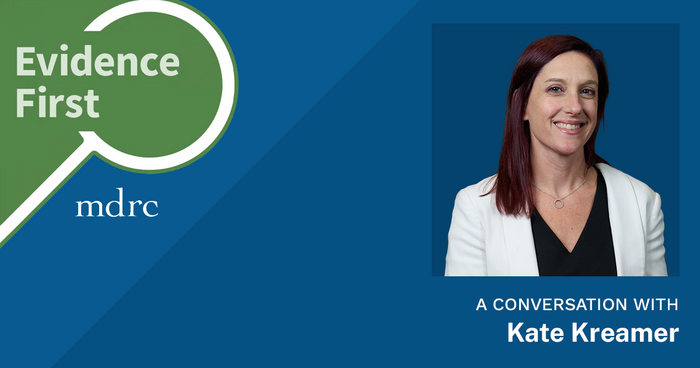
In this episode, Leigh Parise talks with Kate Kreamer, Executive Director of Advance CTE, the national nonprofit that represents state CTE directors and state leaders of career and technical education. They discuss how CTE has evolved, how it can meet the needs of learners in a changing labor market, and where more research is needed.